Every year I have ordered trees, there is always the thought "This is my last tree order. Next year I will work on..."
but every year there are more fruit trees that I can't resist. Is shopping for fruit trees something that shouldn't be done on an empty stomach, like grocery shopping? Should I only look at catalogs when stuffed full of apples/grapes/nuts/plums and cherries?
This year Would Be Different. Only one tree, a rare cider apple tree, where the apples aren't used for eating or cooking, but for adding tannins and depth to hard cider. Only one tree was good in theory, but in practice I ordered four.
Tree One: Dabinett Cider Apple - Late Fall. Medium bittersweet. Probably a seedling of Chisel Jersey, Middle Lambrook, Somerset, England. Most popular cider variety in Somerset today and the mainstay of Poverty Lane’s cider orchard. At the MOFGA cider workshop, Steve Woods told us, “If you’re going to plant one bittersweet, plant this one.” Medium-sized roundish fruit covered with sooty brownish brick-red stripes and blush. Looks rotten even when perfectly firm and ripe. Dense astringent juicy flesh. Sugar content fair and fermentation moderate. High quality well-balanced low-acid cider with a soft-tasting tannin. Pick last week of October, blend with other late varieties. Crops regularly. Grower-friendly tree with a spreading drooping habit, may require help in developing a strong central leader. Not pollen compatible with Chisel Jersey. Midseason bloomer. Z4-6. ME Grown.
This was the original tree that I had been planning to buy for about three years. I have a fascination with hard cider that isn't satisfied by commercial brands of cider. My Guy and I have been trying different kinds for a few years now, and nothing actually tastes like apples. At least not in a good way. So this tree is the base of what I hope will be the beginning of my own personal hard cider cellar. And also something to give to my friend Big Cat, as a testament to her years of friendship and her devotion to hard cider drinking.
Tree Two: Grimes Golden Apple - Fall. Unknown parentage. West Virginia, c. 1804. All-around excellent variety grown in old Maine orchards for over 100 years. Medium-sized roundish fruit with opaque yellow skin, scattered with grey russet dots and an occasional faint blush. Thought to be a parent of Golden Delicious. Tart citrusy crisp dense firm fruit is excellent for dessert and cooking: wonderful spicy fresh eating and wonderful apple sauce. Makes a thick sweet cider and a good single-variety hard cider: light and fruity. Tends to begin dropping fruits before you can pick them, but fret not; they’re ready to eat. Just collect them off the ground as they fall and use them up. Then pick the rest off the tree and store in the root cellar until spring. Productive, annual bearing, precocious. Highly recommended. In short supply; order early. Z4-8. ME Grown.
This is the tree I don't have room for, didn't intend to buy, but how could I resist? Can you imagine a whole tree filled with bright golden apples? Tart citrusy apples? Apples that just fall off the tree begging to be eaten? Two of my friends will really appreciate this apple. One for its name and the other who loves yellow apples more than red ones. My Guy, Miss Critterpants and I spent the day walking around the property trying to find a perfect spot for it. I think it will have to go at the edge of the lawn over by the barbecue pit/smoke house area. We can watch the grill and eat apples. My Guy can have all the prunings for his smoker and everything will be fine for this poor, unintended tree.
Tree Three: Stella Sweet Cherry - Midsummer. 2C-27-19 (Lambert x John Innes Sdlg. 2420) Canadian Dept of Ag Research Stn, Summerland, BC, 1968. The first hardy good-quality self-fertile sweet cherry. Large heart-shaped black-skinned fruit has juicy medium-firm black flesh. May be a disappointment to sweet cherry aficionados from the Northwest but could be like a dream come true for orchardists living in the warmer locales of Maine. Fruit buds are relatively tender. Upright spreading vigorous productive tree will grow to 25–30'. Self-pollinating, also pollinates other sweet cherries. Z4.
To replace my dying Black Gold Cherry. I trust Fedco when they say it is a zone 4 sweet cherry, and there has to be a sweet cherry tree in my orchard collection. It is of great importance that we have too many cherries to eat on an annual basis.
Tree Four: Ember Plum - Late Summer. MN 83 (Prunus salicina Shiro x P. americana (?) South Dakota #33) U Minn, 1936. Medium-sized roundish-conic slightly pointed mostly red-blushed fruit with a medium bloom. Rich yellow very firm but tender, meaty juicy sweet flesh. Recommended for cooking and fresh eating. Tastes and looks like an apricot. Low spreading vigorous tree. Underwood is said to be a good pollinator. Z3. ME Grown.
I'll share a secret with you, I love apricots and many of the people I love, love apricots too. Unfortunately, zone 5A is not a apricot-friendly zone. I already have two plums planted and a third wouldn't be too much of a strain space-wise. Fedco recommends that hybrid plums be planted so closely that their branches mesh. One more plum added to the mix makes a pretty grouping of three, and maybe I can nestle a little bench beneath the plum grove. And plum-apricot butter sounds so good! Plus apricot-plum jam, dried plums, three plum tart, all things made with apricot flavored plums!
This order brings the tree count up to:
5 apple trees (plus one chance seedling)
3 plum trees
3 cherry trees (one dying)
1 almond tree (dead)
1 grape vine
next year i swear, only one last apple tree. Another rare cider apple tree, and that's it!
And maybe a yellow grape vine, a couple of kiwi vines, some northern pecans or hicans, some white oaks for the back of the property, another almond to replace the dead one, three pear trees, and lingonberry bushes, and maybe a couple of wintergreen plants....
Saturday, November 13, 2010

Sunday, November 7, 2010
Apples up to my eye
The apple picking season is over, but my favorite orchard still has a whole harvest for sale out of their storage. I can't stop buying Northern Spy, Wealthy and Empire apples. Northern Spy and Wealthy are amazing to cook with. Pies, apple butter, crisps and crumbles keep marching out of my kitchen and the flavor of these apples really shines.
Northern Spy is an accidental seedling discovered in the early 1800's in either New York State or Connecticut, and one of its parents is Wagener. Wherever it came from, it is an excellent culinary apple and not too shabby to eat out of hand! The trees can take up to ten years to bear, so I am grateful for my local orchard for their foresight and love of pies.
I planted a Wealthy apple tree on our property two years ago, and we will probably be getting fruit in two years. Bred in Minnesota in the 1800's from a crab apple, it is cold hardy, disease resistant, and yummy. They keep all winter and are sweet, tart and addictive. The texture is like a firm McIntosh, good for pies, eating and even cider.
The Empire apple is a cross between red delicious and McIntosh apples. I don't really care for either of its parents, but I can't stop eating Empire apples. They are crisp and flavorful and are so dark red they almost look black. Snow White would have taken a bigger bite of this apple. Eve would have eaten the whole thing and gone back for another. Atalanta would have thrown a dozen races. I love these apples and eat about three a day.
Northern Spy is an accidental seedling discovered in the early 1800's in either New York State or Connecticut, and one of its parents is Wagener. Wherever it came from, it is an excellent culinary apple and not too shabby to eat out of hand! The trees can take up to ten years to bear, so I am grateful for my local orchard for their foresight and love of pies.
I planted a Wealthy apple tree on our property two years ago, and we will probably be getting fruit in two years. Bred in Minnesota in the 1800's from a crab apple, it is cold hardy, disease resistant, and yummy. They keep all winter and are sweet, tart and addictive. The texture is like a firm McIntosh, good for pies, eating and even cider.
The Empire apple is a cross between red delicious and McIntosh apples. I don't really care for either of its parents, but I can't stop eating Empire apples. They are crisp and flavorful and are so dark red they almost look black. Snow White would have taken a bigger bite of this apple. Eve would have eaten the whole thing and gone back for another. Atalanta would have thrown a dozen races. I love these apples and eat about three a day.
Monday, November 1, 2010


Wednesday, October 20, 2010
The Moon
The Moon is rising over the cemetery next door and shining in our windows through the cedar. Saturday is the actual full moon, but it is terribly bright tonight. It makes a monochromatic lace of tree, clouds and light. The kind of night to sit outside, with something warm to drink, and watch it rise and set.
Sunday, October 17, 2010

Thursday, September 23, 2010


Friday, September 17, 2010
nervous
Tomorrow I am joining a group of women selling knit goods at the farmer's market. I am very nervous. Pictures coming soon
Monday, September 13, 2010
Fungus among us
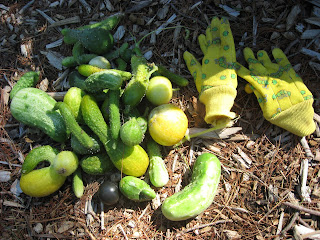
The super dry summer was hard on the garden. It stressed the plants and made them susceptible to all sorts of diseases. The cucumbers and the summer squash were both hit pretty hard with powdery mildew. The cukes kept producing up to the bitter end, but they were kind of funny looking.
To prevent the mildew from coming back next year, I yanked all the plants out and bagged them for the dump. If they were composted, the spores would have been put back into the garden next year and the cycle would repeat.
I have read that corn meal added to the soil encourages the growth of a harmless fungus that crowds out powdery mildew and other nasty bugs. or maybe the corn meal feeds a fungus that will eventually feed on other fungi. something like that. So I added a cup or two of corn meal and some compost and planted about 36 cloves of garlic. Next week is my seasonal manure pickup, and I will mulch give it a generous mulching of manure and peat. and maybe some limestone if my soil tests come back saying the dirt is too sour.
you'll have to excuse my rambling post. I have a new job and between getting Miss Critterpants to daycare and the drive, I have to wake up a little bit before 5am. It's a difficult schedule for my lazy stay-at-home-Mom ways.
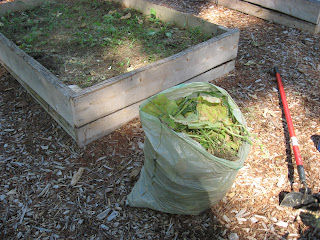
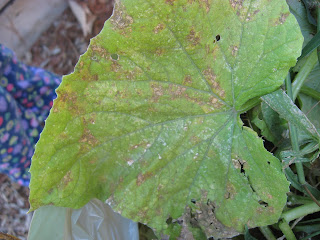


To prevent the mildew from coming back next year, I yanked all the plants out and bagged them for the dump. If they were composted, the spores would have been put back into the garden next year and the cycle would repeat.
I have read that corn meal added to the soil encourages the growth of a harmless fungus that crowds out powdery mildew and other nasty bugs. or maybe the corn meal feeds a fungus that will eventually feed on other fungi. something like that. So I added a cup or two of corn meal and some compost and planted about 36 cloves of garlic. Next week is my seasonal manure pickup, and I will mulch give it a generous mulching of manure and peat. and maybe some limestone if my soil tests come back saying the dirt is too sour.
you'll have to excuse my rambling post. I have a new job and between getting Miss Critterpants to daycare and the drive, I have to wake up a little bit before 5am. It's a difficult schedule for my lazy stay-at-home-Mom ways.


Saturday, September 11, 2010
Today
Today is nine years since I walked to Queens from 17th and 5th. I will always be thankful for the company I had that day and the kindness of a friend who had volunteered to let us stay with him.
Sunday, September 5, 2010
Sweet Cherry Demise
My Black Gold sweet cherry is dying a slow and horrible death from THE CANKER. Canker is a bacterial infection in the bark that can be pruned out and the tree survive, if the disease is in a twig or branch. However, my tree is the Mimi of the garden and is dying in a big dramatic opus of oozy sap and an infected trunk. koff koff hack hack big finishing aria and dead. I will be surprised if she makes it through the winter.
A piece of advice that I have taken is to always plant disease resistant trees because they are such an investment of time and money, and Black Gold cherry from Starks is not an exception. I do think because it is a Zone 5 tree, instead of my preferred Zone 4, it suffered winter bark damage which made it susceptible to Canker.
sigh.
So I spent many hours researching sweet cherries that were not only disease resistant, but hardy to zone 4 and happy on the east coast.
My results are as follows:
Kristen - zone 4, very winter hardy, good to moderate crack resistance (where the cherries split, not the cocaine-based drug. either way, it's good) It's an early season bearer and the fruit is moderately sized and firm, dark red. - my concerns are that it is an early season fruit, which usually means it blooms earlier in the spring and we can have frosts all the way to the end of May.
White Gold - zone 4b, well adapted to the North East, low susceptibility to cherry leaf spot and bacterial canker (CANKER!), self-fertile, mid to late season bloom. The fruit is light yellow and has a good flavor. - my concerns are, well there really aren't any. it's hardier than any other cherry, specifically resistant to the disease we have here and it pollinates itself! but it's yellow. and I kind of love red cherries. It's a stupid reason not to choose what would otherwise be considered a perfect tree, but still...
Sylvia - zone 4, good bacterial canker tolerance, cracking resistance varies widely, late season bloomer and the fruit is dark red, large and firm. It sounds great! Except it needs another late season bloomer to pollinate it. So there would have to be another hold hardy, late season disease resistant sweet cherry nearby
Hudson - zone 5, bred in the Hudson River Valley in NY, it is listed as very good winter tolerance, canker and crack resistant, late season bloomer, fruit is large, firm and mahogany red. it's zone 5! how winter resistant could it be? but if it could survive here, it would be a perfect pollinator for Sylvia. Sylvia and Hudson would make such a handsome sounding couple, but I may only have room for one tree.
On top of choosing a new tree, there will have to be a new planting site, because the bacteria can harbor in the soil. So, if I am choosing a new site on our property, maybe I can plant TWO sweet cherry trees! Sylvia and Hudson could be together with their branches lovingly entangled , and I would cover them with bird netting to give them privacy from those nosey crows that tend to hang about.
A piece of advice that I have taken is to always plant disease resistant trees because they are such an investment of time and money, and Black Gold cherry from Starks is not an exception. I do think because it is a Zone 5 tree, instead of my preferred Zone 4, it suffered winter bark damage which made it susceptible to Canker.
sigh.
So I spent many hours researching sweet cherries that were not only disease resistant, but hardy to zone 4 and happy on the east coast.
My results are as follows:
Kristen - zone 4, very winter hardy, good to moderate crack resistance (where the cherries split, not the cocaine-based drug. either way, it's good) It's an early season bearer and the fruit is moderately sized and firm, dark red. - my concerns are that it is an early season fruit, which usually means it blooms earlier in the spring and we can have frosts all the way to the end of May.
White Gold - zone 4b, well adapted to the North East, low susceptibility to cherry leaf spot and bacterial canker (CANKER!), self-fertile, mid to late season bloom. The fruit is light yellow and has a good flavor. - my concerns are, well there really aren't any. it's hardier than any other cherry, specifically resistant to the disease we have here and it pollinates itself! but it's yellow. and I kind of love red cherries. It's a stupid reason not to choose what would otherwise be considered a perfect tree, but still...
Sylvia - zone 4, good bacterial canker tolerance, cracking resistance varies widely, late season bloomer and the fruit is dark red, large and firm. It sounds great! Except it needs another late season bloomer to pollinate it. So there would have to be another hold hardy, late season disease resistant sweet cherry nearby
Hudson - zone 5, bred in the Hudson River Valley in NY, it is listed as very good winter tolerance, canker and crack resistant, late season bloomer, fruit is large, firm and mahogany red. it's zone 5! how winter resistant could it be? but if it could survive here, it would be a perfect pollinator for Sylvia. Sylvia and Hudson would make such a handsome sounding couple, but I may only have room for one tree.
On top of choosing a new tree, there will have to be a new planting site, because the bacteria can harbor in the soil. So, if I am choosing a new site on our property, maybe I can plant TWO sweet cherry trees! Sylvia and Hudson could be together with their branches lovingly entangled , and I would cover them with bird netting to give them privacy from those nosey crows that tend to hang about.
Subscribe to:
Posts (Atom)
